What Does It Actually Mean to Be Sexually Healthy?
When people hear the words sexual health, they often think of the basics: STI testing, contraception, safer sex, maybe getting an annual exam.
Those things matter. But they’re only one part of it.
As a sex therapist, I think about sexual health much more broadly. It includes your physical wellbeing, but it also includes your relationship with desire, pleasure, boundaries, your body, your partners, and even the beliefs you’ve absorbed about what sex is “supposed” to look like.
And that means someone can be physically healthy and still have a sexual life that doesn’t feel particularly healthy at all.
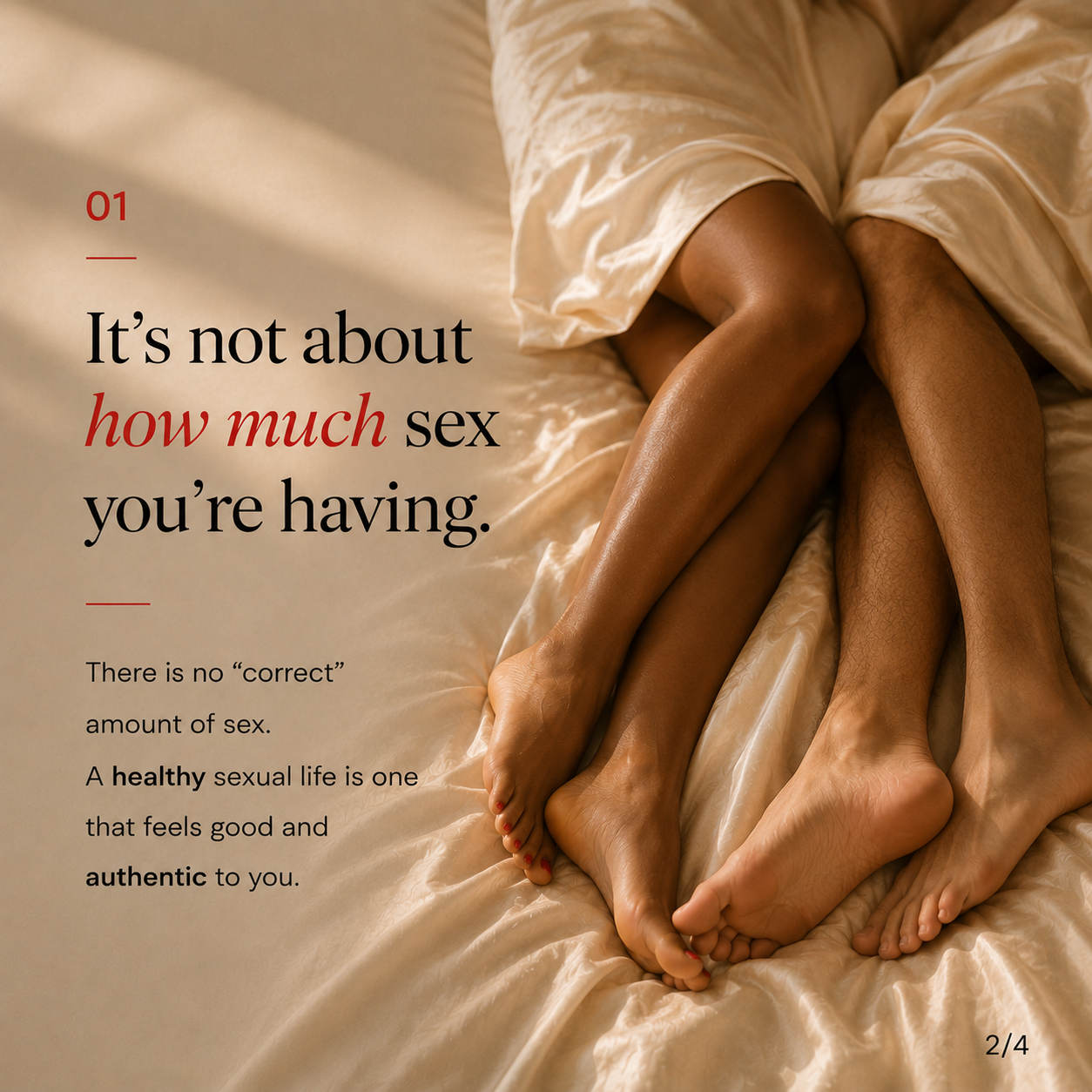
Sexual health isn’t about how much sex you’re having
There is no correct amount of sex to be having.
You can have sex frequently and feel disconnected, pressured, bored, anxious, or unsatisfied. You can have very little sex, or none at all, and feel perfectly content.
One of the most common traps I see is using frequency as a scorecard.
Are we having enough sex?
Is everyone else having more sex than us?
Should I want it more often?
A better question is: Does the sexual life I have feel good and authentic to me?
That answer matters much more than a number.
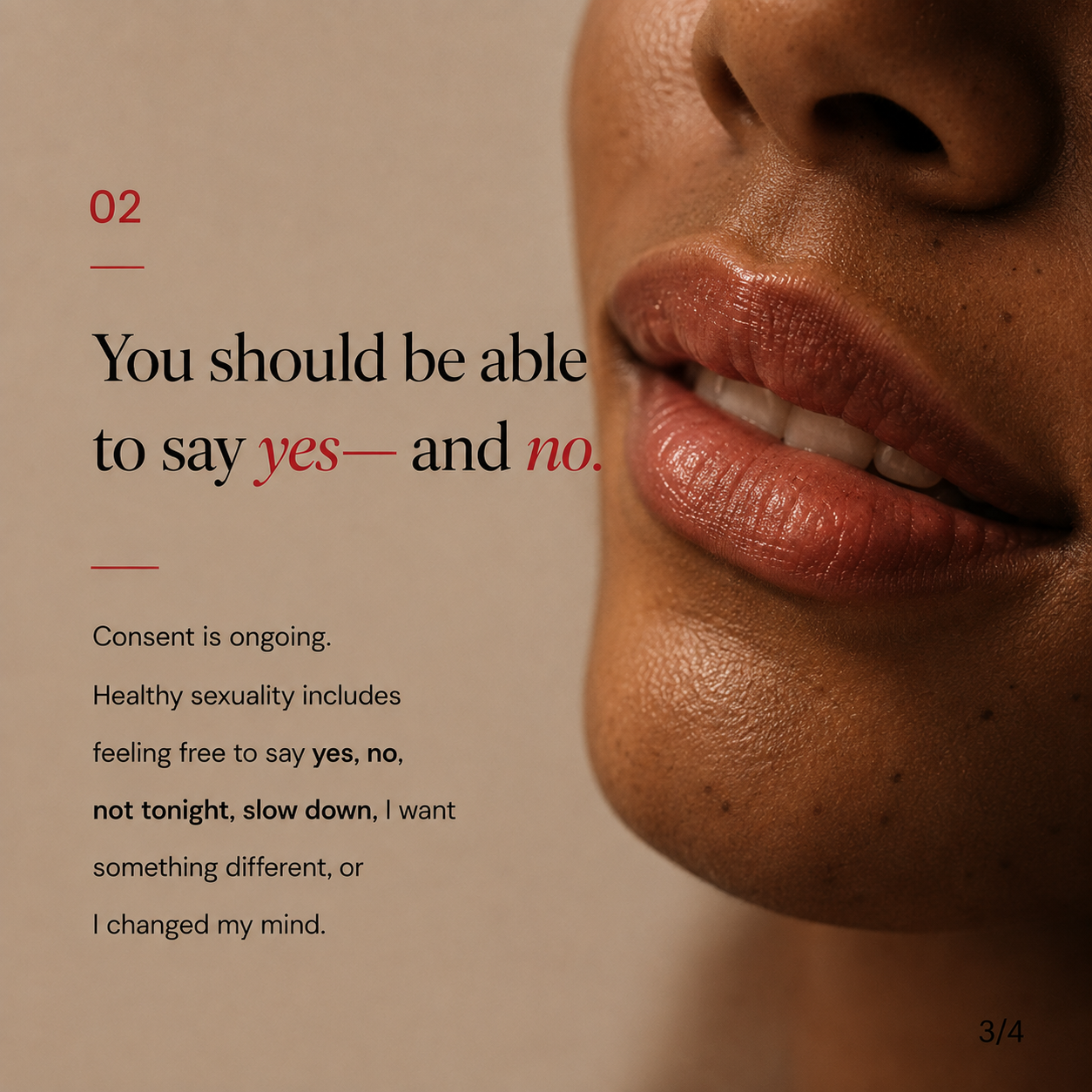
You should be able to say yes—and no
Consent is more than the absence of force.
Healthy sexuality includes feeling genuinely free to say yes, no, not tonight, slow down, I want something different, I changed my mind, or I don't know yet.
It also means being able to express what you actually want without feeling that your partner’s ego, mood, or affection depends on your answer.
Sometimes people technically consent to sex while internally feeling obligated to provide it. Over time, that can create resentment, avoidance, and even aversion.
Sex is very different when participation comes from choice rather than obligation.
Pleasure matters
For a surprisingly long time, conversations about sexual health have focused primarily on avoiding negative outcomes: pregnancy, infection, pain, dysfunction, regret.
But pleasure belongs in the conversation too.
Can you identify what feels good to you? Can you communicate it? Do you feel entitled to enjoy sexual experiences rather than simply participate in them?
For some people, those questions are surprisingly difficult.
Many of us received plenty of messages about what we shouldn't do sexually and very little education about desire, arousal, pleasure, or how to develop a comfortable relationship with our own bodies.
Learning those things as an adult is still learning.
Your body doesn't owe you the same response forever
Desire changes.
Bodies change.
Relationships change.
Pregnancy, postpartum life, menopause, stress, medication, illness, grief, aging, parenting, body-image changes and countless other experiences can affect sexuality.
Sometimes the problem isn't that your body has changed. The problem is that you're expecting your current body to behave exactly like a previous version of it.
Sexual health sometimes requires curiosity rather than correction.
Instead of asking, How do I get back to exactly how I was? it can be more useful to ask:
What does pleasure look like for me now?
You don't have to be “normal”
One of my least favorite concepts in sexuality is “normal.”
People worry that they don't have enough sex, want sex too much, take too long to orgasm, don't orgasm the “right” way, need something unusual to become aroused, aren't spontaneous enough, have fantasies they think they're not supposed to have, or simply aren't interested in the kind of sex they've been told they should enjoy.
There is enormous variation in human sexuality.
Healthy sexuality isn't about fitting yourself into a narrow definition of normal. It's about consent, safety, respect, agency, pleasure, and whether your sexual experiences align with your own values.
Different doesn't automatically mean dysfunctional.
Sexual health also means being able to talk about sex
For many couples, talking about sex is actually harder than having it.
They can share a bed, raise children, combine finances, and build an entire life together but asking, “Are you happy with our sex life?” feels terrifying.
So they don't.
Instead, they hint. They initiate and feel rejected. They stop initiating. They make jokes. They keep score. They assume they know what the other person wants.
Sexual communication is a skill, and like most skills, it gets easier with practice.
You don't need perfectly polished language. You need enough emotional safety to be curious about each other.
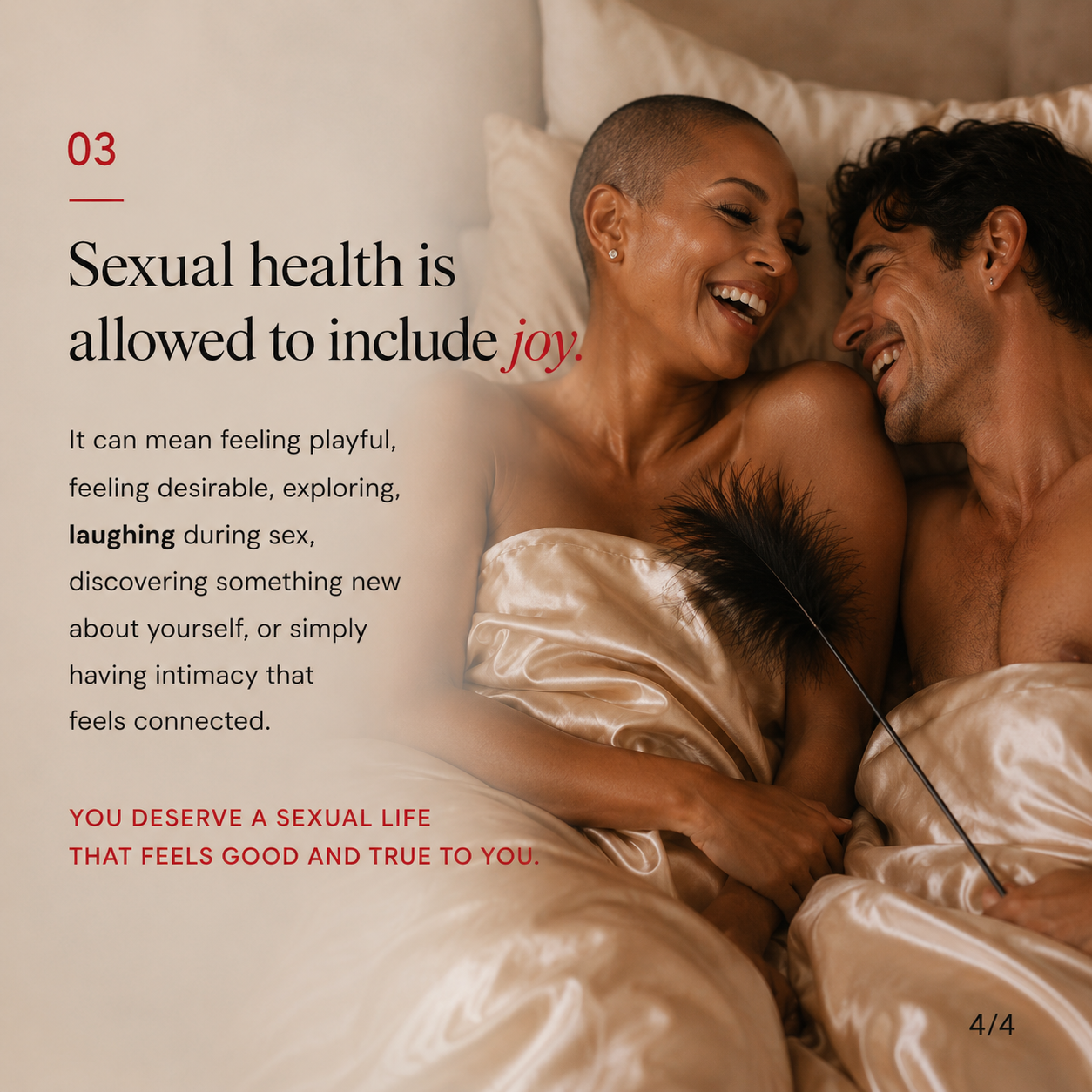
Sexual health is allowed to include joy
This might be the piece we forget most often.
Sexual health isn't only about fixing problems.
It can also mean feeling playful. Feeling desirable. Exploring. Laughing during sex. Discovering something new about yourself at 25, 45, or 65. Feeling at home in your body. Having intimacy that feels connected—or sex that is simply fun.
During Sexual Health Month, I want us to expand the definition.
Sexual health isn't a performance review of your body or your relationship.
It's having the knowledge, freedom, communication, safety, and agency to build a sexual life that actually belongs to you.